Hedgewood School
Science
Our science curriculum is designed to nurture each pupil’s curiosity and sense of wonder about the world around them. Through carefully structured and responsive teaching, our young scientists gain lifelong enquiry skills, alongside developing an early understanding of key ideas in biology, chemistry and physics. Our curriculum enables all pupils—regardless of their starting points or learning needs—to access meaningful scientific experiences and develop secure foundations for their future learning.
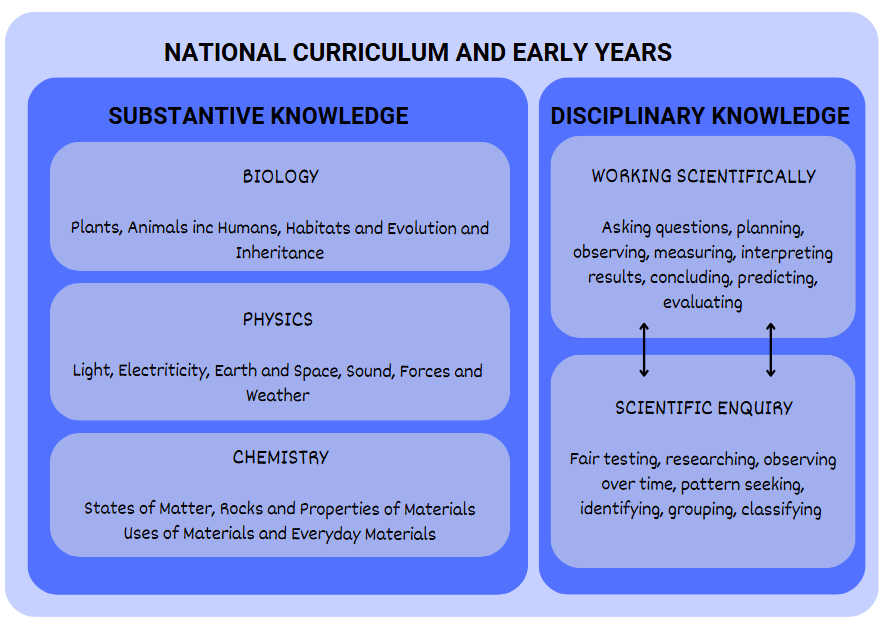
We teach science discretely, ensuring that pupils build substantive knowledge (such as understanding the natural world and materials) alongside disciplinary knowledge (such as observing, questioning and testing). Each learning sequence is grounded in our progression map and is further enriched through sensory exploration, real-life contexts, and communication opportunities suited to the needs of our learners.
Substantive knowledge refers to the key scientific facts and concepts children are expected to learn, drawn from the Early Years Foundation Stage Framework and the National Curriculum. This includes knowledge from the core scientific disciplines of biology, chemistry and physics—such as understanding living things, the properties of materials and physical processes. Our science progression map sets out a clear, coherent sequence of learning from the early years through to Year 6, ensuring that each pupil can build on prior knowledge at their own pace. Where appropriate, we enhance this learning with additional content from the Core Knowledge Sequence, ensuring that all pupils have access to rich, broad scientific experiences
Disciplinary knowledge helps pupils to understand how scientific knowledge is generated, tested and refined. It includes the processes and practices that scientists use when they investigate the world around them. This is developed through the Working Scientifically strand of the curriculum, which is woven into every science unit. We support our pupils to explore, question, test and evaluate ideas in ways that reflect their individual learning needs and communication styles.
The Working Scientifically strand includes opportunities for pupils to:
- Ask simple questions and recognise what makes a good question
- Plan and take part in investigations, using visual and sensory prompts
- Observe changes and patterns, using practical and sensory-based experiences
- Measure and record findings using pictures, symbols, simple tables or digital tools
- Present results in accessible ways, such as photo diaries, annotated drawings or graphs
- Talk about what they notice, make simple predictions, and draw conclusions with support
Across all science lessons, we emphasise repetition, modelling and hands-on experience to help pupils embed their learning. Science teaching at Hedgewood is flexible and adaptive, with appropriate scaffolds and supports to ensure that every child is included, engaged and making progress in their understanding of the world around them.